What was the challenge?
Integrated Water Resources Management is founded on the principle that water resources are most effectively managed when those who depend on them participate in decision-making. Prior to the implementation of the Promoting Integrated Water Resources Management (IWRM) in Kenya project, opportunities for structured public participation in water resources management were limited in many parts of the Athi River Basin. Community members often had little influence over planning processes, while engagement between public institutions and water users was largely ad hoc.
What did CESPAD do?
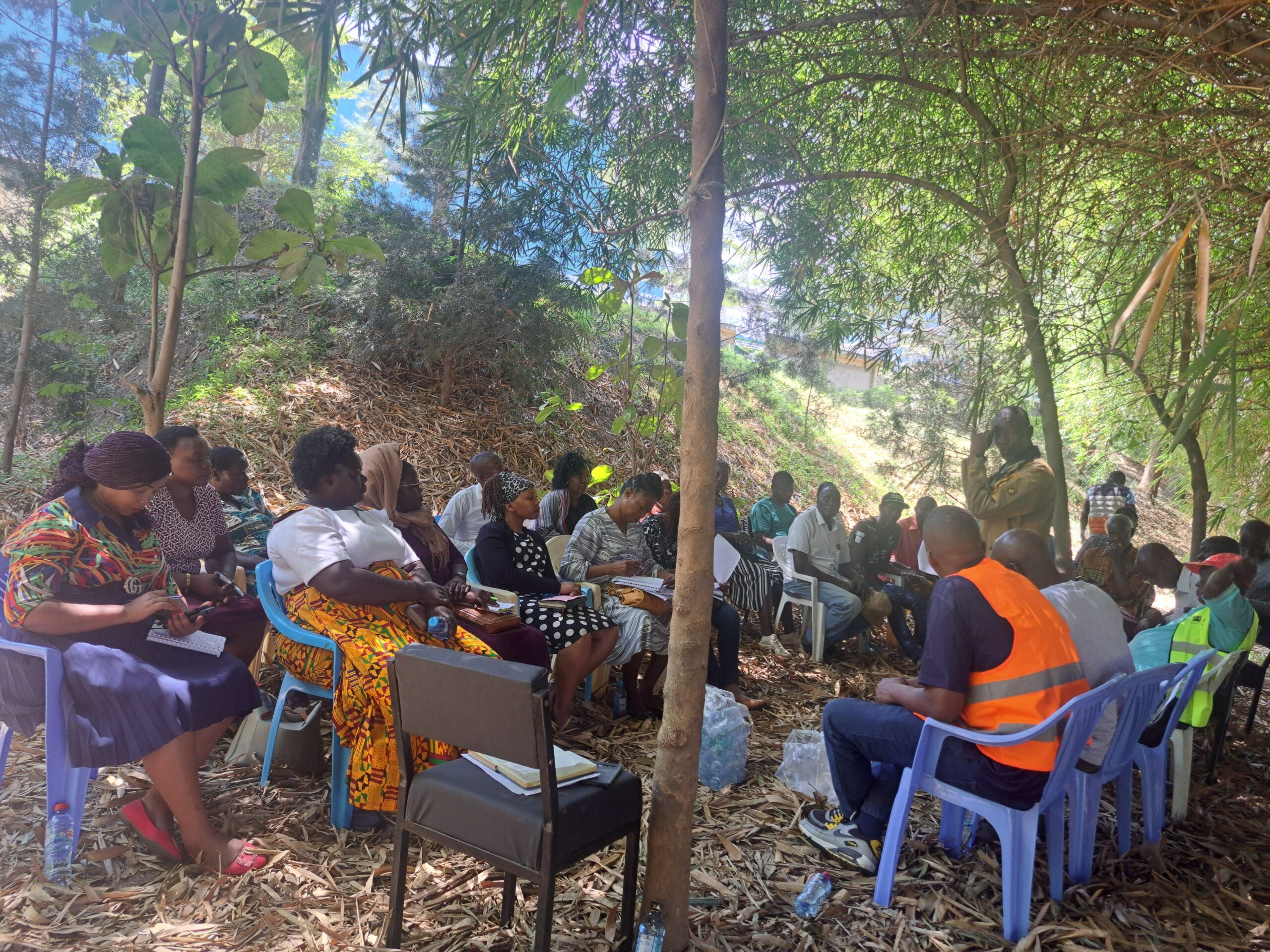
CESPAD worked with the Water Resources Management Authority (WRMA), county governments, Water Resource Users Associations (WRUAs) and other stakeholders to strengthen mechanisms for public participation in water governance. The project promoted inclusive planning processes that enabled communities to identify local water challenges, contribute to the development of Sub-Catchment Management Plans and participate in discussions on county policies and investment priorities.
Public participation was facilitated through stakeholder forums, community consultations, policy dialogue meetings and catchment planning workshops. These forums brought together community members, technical officers, county governments and sector institutions to discuss issues affecting water resources, including catchment degradation, water allocation, environmental conservation and investment priorities. The approach encouraged dialogue between water users and decision-makers while ensuring that planning processes reflected local knowledge and experience.
What was produced?
The project also strengthened the role of WRUAs as representative community institutions. By building their organisational capacity and supporting the establishment of County WRUA Councils, the project created structured channels through which communities could continue engaging with county governments and technical agencies beyond the life of individual project activities. These platforms strengthened communication between communities and public institutions and supported continued participation in water governance.
What changed?
The participatory processes contributed to a number of documented outcomes during project implementation. Community priorities informed the preparation of Sub-Catchment Management Plans, supported county policy development and influenced public investment in water resource management. The project also strengthened collaboration among institutions responsible for water governance, creating opportunities for joint planning and shared accountability in the management of catchments.
The experience demonstrated that public participation is more effective when it is supported by formal institutions, clear planning processes and sustained engagement between communities and government. Consultation alone is insufficient; communities require structured opportunities to contribute to decisions and mechanisms through which their priorities can be considered in policy, planning and budgeting.
What did we learn?
Our experience illustrates that participatory governance strengthens both the quality and legitimacy of water resources management. By supporting inclusive planning, strengthening community institutions and facilitating dialogue between citizens and public agencies, the project contributed to governance processes that were more responsive to local priorities and better positioned to support the sustainable management of water resources.